A First Wardrobe Check Before the Season Turns
A first wardrobe check shows which clothes are ready, need attention, or leave a real gap, so you can plan the season without duplicate purchases.
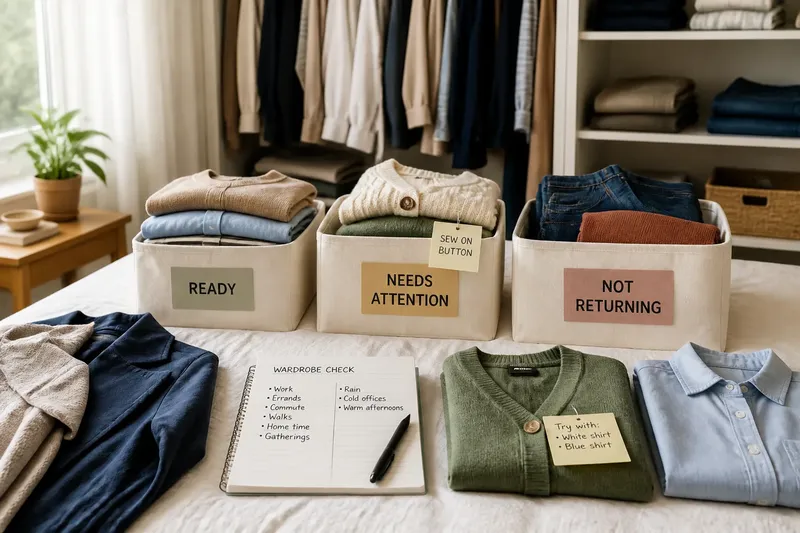
A first wardrobe check often goes wrong when you pull everything out at once and end up with a heap you cannot finish sorting. Start with one season and a defined group of clothes instead: you will see what is wearable, what needs a specific task, and what is actually missing.
Choose a clear surface, such as a bed covered with a clean sheet, and bring a notepad, pen, and three labeled bags or boxes: Ready, Needs Attention, and Not Returning. Work through clothes from your closet and dresser, then check the laundry area and storage for pieces you may have forgotten.
Choose the season
Think about the places you expect to go during the coming season: work, school, errands, walks, gatherings, or time at home. Use your real routine rather than an imagined calendar, and note any conditions your clothes need to handle, such as rain, cold offices, or warm afternoons.
Keep accessories like belts and scarves nearby if they affect how an outfit works. You do not need to empty every drawer at once; a manageable group makes it easier to inspect each item properly.
Inspect each garment
Check underarms, cuffs, hems, knees, seat seams, pockets, and closures in good light. Look for stains, thinning fabric, loose buttons, broken zippers, stretched elastic, and seams that have started to open. Try on anything whose fit or comfort you cannot judge on the hanger.
For each item, make one of these decisions and write down the reason:
- Ready: If the garment is clean, comfortable, and functional, put it in Ready; if it is not clean, move it to Needs Attention for laundering.
- Needs laundering or pressing: If washing or pressing should make it wearable, write the task and place it in Needs Attention; if the care label or fabric makes home care uncertain, check the label or ask a qualified cleaner.
- Needs repair: If one clear repair would restore a garment you use, note the repair and set it aside; if damage is extensive or the item is uncomfortable, move it to Not Returning or consider professional advice.
- Not suitable now: If the garment does not fit your present comfort or routine, keep it out of active rotation; if a realistic alteration could help, note that option separately instead of planning outfits around a hoped-for fit.
- Not returning: If the item is too damaged, unsuitable, or consistently avoided, check local donation or textile-reuse requirements; if it is not accepted as wearable, use an appropriate textile-reuse route where available.
- Unclear: If you cannot name a likely use, set it aside for a second look; if you still cannot identify a role after comparing it with your routine and other clothes, leave it out of this season's rotation.
Keep the Needs Attention group from turning into a hiding place. Each piece should have a specific task, such as washing a cotton shirt, sewing on a button, or asking a tailor whether a trouser hem can be adjusted.
Match clothes to use
For each Ready item, name a likely occasion. “Warm layer for the commute” or “comfortable trousers for work” is more actionable than “nice to have.” If you cannot picture a realistic use, set the garment aside rather than forcing it into the seasonal rotation.
Check whether pieces make workable outfits with clothes you already own. A jacket in good condition may not suit any shirt you like wearing under it, while a skirt that seemed isolated may work with a sweater already in your closet.
Say you find a clean wool cardigan at the back of a drawer with one loose button, and you need a layer for a cool office. You write “sew on matching button,” place it in Needs Attention, then try it with two shirts already in your rotation. If it feels comfortable with either shirt, the observable result is a specific office outfit after the repair; if neither combination works, you can keep it out of the active plan and reconsider whether the repair is worth doing.
What belongs in rotation?
Should I keep clothes I have not worn lately?
Consider why you passed over the item, not only how long it stayed unworn. If it suits a likely occasion and feels comfortable, include it; if fit, fabric feel, or styling difficulty keeps putting you off, move it out of active rotation and decide separately whether to alter, store, or let it go.
What should I do with clothes that need repair?
Write down the actual job, such as replacing a button or asking a tailor about a hem, and keep the garment somewhere visible until you act. For delicate fabric or a complicated closure, ask a qualified repair professional rather than risking damage with an unsuitable fix.
How should I handle clothes that no longer fit?
Separate them from clothes you can wear comfortably now. Consider an alteration only for a garment that suits your routine and seems worth adjusting; do not build this season's outfits around a hoped-for future fit.
When should I buy something new?
Identify a specific use that your Ready clothes cannot cover. A regular walk in rainy weather may call for a suitable rain layer; a vague urge to refresh the closet is not a clear wardrobe gap.
Finish the pending tasks
Group Needs Attention by action: laundry, pressing, mending, tailoring, or a care question. Add a reminder for tasks you might forget, and keep these clothes apart from Ready pieces until the work is done.
Before donating unwanted clothes, check the local donation center's condition rules. If an item is too stained or worn to pass on as wearable, ask whether a textile collection accepts it; do not assume every drop-off point takes every kind of textile.
Once tasks are complete, put seasonal clothes where you can reach them. Store off-season pieces in a clean, dry place, and keep unfinished repairs separate so they do not blend back into ready-to-wear clothes.
Buy to fill a real gap
Write each possible purchase beside its intended use, the clothes it needs to work with, and the comfort or weather requirements you already know. Before shopping, check whether a different outfit combination, a cleaned item, or a completed repair covers that need.
If nothing you own serves the role, look for a garment suited to that specific use and compatible with your current rotation. A first wardrobe check is useful when it gives you a reason to buy—or a practical reason to wait.