How to Compare Woven Fabric by Texture and Drape
Compare woven fabric by its visible structure, texture, and drape to choose cloth that suits a garment’s shape and surface, not just its weave name.
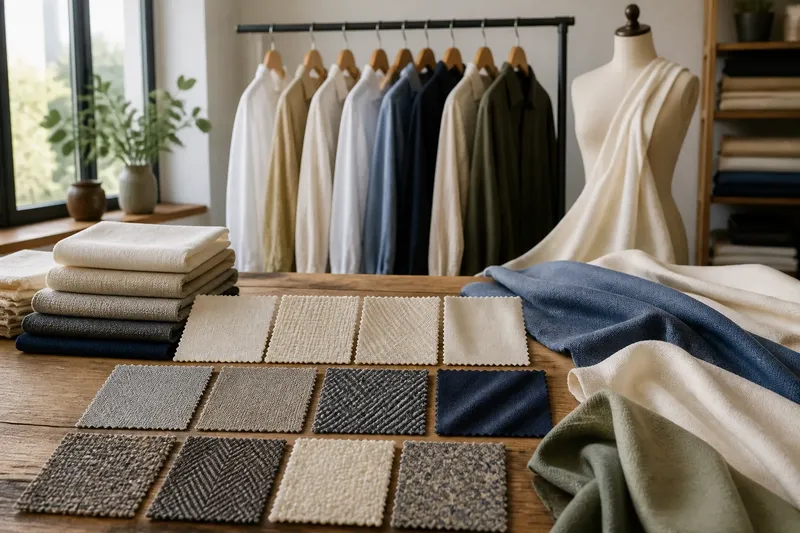
A smooth-looking surface can distract you from how woven fabric will hang or behave in the garment you have in mind. Compare its structure, texture, and drape instead of choosing by appearance alone; those clues help you match cloth to a silhouette without treating one weave as universally better.
Read the weave
Woven cloth forms where lengthwise warp threads cross widthwise weft threads. The order in which those threads pass over and under one another creates the structure, which may be visible even when the fabric is a solid color.
Hold a swatch under steady light and view it from different angles. Plain weave often looks like a balanced grid, twill may show diagonal ribs, and satin structures have longer floats that can make the face look smoother or more reflective. A float is a thread that passes over several crossing threads before going under again.
A printed stripe sits on the surface, while a woven stripe comes from yarns arranged in the cloth. Check the reverse if possible: a woven pattern may show on both sides, though its appearance can differ. Notice whether texture comes from the interlacing, raised yarns, or a surface finish.
Separate texture clues
Plain weave’s frequent crossings can create a crisp, even-looking face. Depending on the yarn and how tightly the cloth is woven, it may feel firm, papery, or supple; the structure’s name cannot tell you which.
Twill’s diagonal lines give the surface a directional character. Satin’s longer floats can create a smooth face and shifting highlights, but may catch more readily on rough surfaces than cloth with frequent crossings. Slub yarns, brushing, pile, jacquard patterns, and finishing treatments also change how a fabric looks and feels.
Compare fabrics side by side under similar light. If an irregular surface catches your eye, check whether the variation is part of the weave, the yarn, or a finish before deciding whether it suits the garment.
Watch the drape
Drape describes how fabric hangs, folds, and responds to movement. Support a swatch near one edge and let the rest fall freely; on a garment, watch a sleeve, hem, or loose panel as you move. Avoid pulling the cloth, which can make it behave differently from the way it hangs in wear.
A compact, regular structure may hold a defined shape, while a softer or more fluid cloth may form deeper folds. Yarn, fiber, weight, density, and finishing affect that result too, so two fabrics with the same weave name can hang differently.
Say you are choosing between two hypothetical woven shirts. One has a crisp plain-weave surface and keeps a clean outline when held up; the other has a softer twill and falls closer to the body. If you want a structured look, the first better matches that aim; if you prefer a gentler line, the second does. The observable difference is how their folds and silhouettes behave, not a ranking of their quality.
Let each swatch hang before you judge its folds.
Match fabric to use
Start with the garment’s intended shape and the visual effect you want. Crisp cloth can support sharp lines, fluid cloth can soften them, and pronounced texture can become a design feature. These are options, not a scale from poor to excellent.
- Surface: If the face looks even and restrained, consider it for a smooth effect; if it looks uneven under steady light, compare another swatch before choosing.
- Diagonal ribs: If twill lines remain visible at ordinary viewing distance, choose it when you want noticeable texture; if they disappear, consider a more pronounced weave or a different surface.
- Floats: If satin-like floats look right for the garment, consider the finish; if the item will often meet rough surfaces, compare a structure with more frequent crossings.
- Silhouette: If the cloth holds a crisp line while hanging freely, consider it for a defined shape; if it collapses into soft folds, choose it only if a fluid line suits the design.
- Movement: If folds settle softly and the texture still appeals as the fabric moves, consider it for a relaxed shape; if the surface distracts in motion, inspect a quieter option.
- Reverse side: If a woven pattern remains visible on the reverse, consider whether both sides suit the garment; if the reverse looks different, decide whether that matters for exposed edges or reversible use.
For a fair comparison, assess the same features in the same order: visible structure, surface texture, then drape. Choose the cloth whose traits support the garment you want.
Questions about woven fabric?
Can a weave name predict softness?
Not by itself. Fiber, yarn construction, fabric weight, and finish also shape softness, so touch the cloth when possible and compare it with a similar fabric.
Does a tighter weave mean better quality?
No single density suits every garment. A compact structure may support a crisp appearance, while an open or textured cloth may fit another look; decide by the intended use and feel.
How can you spot a twill?
Look for diagonal ribs rather than a balanced grid. Turn the swatch and change the light angle, since subtle lines may be easier to see from one direction.
What if the surface feels different from its appearance?
Keep the visual clue separate from the tactile one: a smooth-looking face can feel dry or firm, while a textured surface can feel soft. If it is part of a garment, observe how the whole piece moves too.
Make a close comparison
View the fabric in ordinary light from the distance at which the garment will usually be seen. A pronounced texture may look subtle from farther away, while a glossy face can change as the cloth turns.
Keep a note of the weave name and the traits you liked or disliked. The next time you compare woven fabric, those observations can help you spot the surface and drape that suit your garment without turning any single clue into a rule.