Why Ready-to-Wear Sizes Became a Numbered Range
Why ready-to-wear sizes became a numbered range, how labels reflect brand-specific patterns, and what to check so you can choose clothes by fit, not number.
A familiar size number can lead you to the wrong garment if you treat it as a promise of fit. Why ready-to-wear sizes became a numbered range is partly a production story: makers needed repeatable pattern categories for clothing sold without individual fittings. The number helped identify a category, but it never became one universal specification for every brand.
Patterns for production
Clothing has long been made through varied methods, including home sewing, tailoring, dressmaking, and production in workshops. Some garments were shaped for individual wearers; others were made in batches. There was no single path from custom clothing to ready-to-wear.
As makers produced more garments for sale without taking each customer’s measurements, they needed patterns that could be cut repeatedly. A range of sizes organized those patterns into categories, making it easier to produce and sell garments for customers with different body proportions.
Numbers offered a compact way to identify those categories on a garment or shop label. They made stock easier to sort and gave shoppers a starting point, but they did not define one body shape shared by every maker.
Why numbers appeared
A number is a label for a maker’s place in its size range, not a measurement with a universal meaning. Numbering gave manufacturers and retailers a shorthand for organizing related patterns and garments. The labels also helped shoppers ask for and compare items within a particular range.
Over time, makers developed their own pattern blocks and grading rules. Grading adjusts a base pattern to create neighboring sizes, but the changes need not be identical across brands or garment types. A maker may change shoulder width, body length, sleeve shape, or rise according to the intended fit.
That is why two garments with the same number can feel different. The label belongs to the maker’s system, not to a shared industry-wide body specification.
What labels describe
A size number points toward a pattern category; the cut and design determine how that pattern sits on the body. A relaxed shirt allows a different amount of room than a close-fitting one, even if both carry the same label. A stretch knit and a firm woven fabric can also behave differently as you move.
Fit terms help explain the intended shape. “Slim” suggests a closer cut, “relaxed” signals more room, and “cropped” describes a shorter design. Treat those words as clues, then check whether the garment’s proportions suit how you plan to wear it.
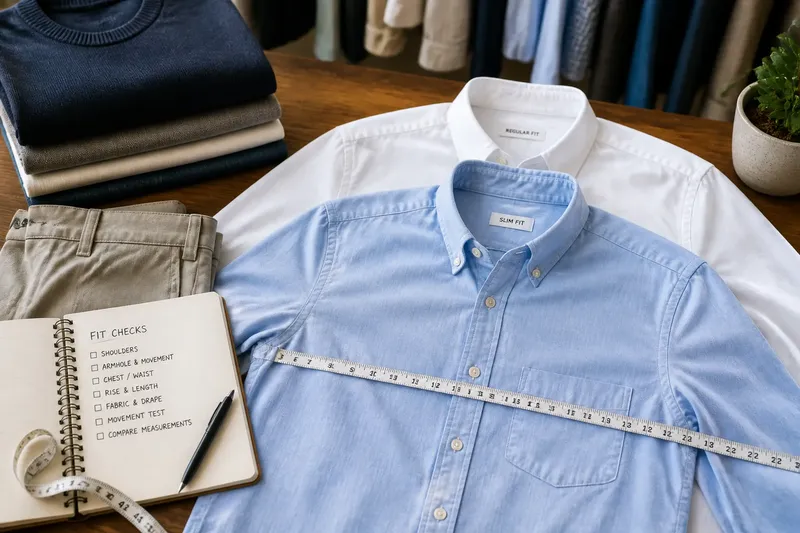
A size chart can narrow your options, but it cannot fully show how a fabric drapes or how a garment feels in motion. Check the garment’s own measurements when they are available.
Fit checks to use
Start with the areas that determine comfort and shape for that garment. A shoulder seam on a conventional shirt should sit near the shoulder edge. The waistband should rest where the trouser cut intends it to sit.
Bend your arm in a shirt or jacket. Notice whether the sleeve restricts movement or pulls the garment’s body out of place.
- Check the garment category. If you are comparing a jacket, use another jacket as your reference; if the reference is a different category, choose a closer match instead.
- Read the fit description. If the item is described as relaxed or oversized and that is the shape you want, assess it on those terms; if you want a closer silhouette, look for a slim or fitted cut instead.
- Inspect the shoulder and armhole. If they pull or restrict movement, try a different cut or proportion; if they sit comfortably, continue checking the rest of the garment.
- Check waist, rise, and hem placement. If the waistband or hem lands awkwardly, compare another rise or length; if it sits as intended, keep assessing comfort and movement.
- Move as you expect to wear it. If sitting, reaching, or layering causes strain or shifting, try another cut or size; if movement feels comfortable and the shape holds, the fit may suit that use.
- Compare measurements. If the brand’s chart or garment measurements conflict with your familiar reference item, use those details to reassess your choice; if they align with the intended fit, keep the candidate in consideration.
- Consider the fabric. If a firm fabric restricts the movement you need, seek a roomier cut or more suitable fabric; if a stretch fabric moves comfortably without losing the intended shape, assess its fit on that basis.
Say you are choosing a woven button-front shirt and usually wear the same label in another brand. The new brand’s chart lists body measurements, its fit note says “slim,” and the garment measurements show less room across the chest than your familiar shirt. You compare both shirts while wearing the layer you plan to use, button the new one, then reach forward and bend your arms. If the buttons pull or the shoulders restrict movement, you set that cut aside and try a roomier option; if the shirt stays smooth and allows movement, its fit is a better match for that use, regardless of the number.
Questions about sizing?
Why do I wear different sizes across brands?
Brands use different pattern blocks, grading rules, fabrics, and fit intentions. A different label can reflect those design choices rather than a change in your body.
Should I size up for more room?
Try a larger size only if the added room helps where the garment feels tight without making other areas awkward. If the shoulder, rise, or length is the problem, a different cut may work better than a larger label.
Are garment measurements useful?
Yes, but they answer a different question from body measurements: they describe the finished item rather than your body. Compare them with the size chart, fit description, and intended ease.
Can alterations fix a size mismatch?
A hem adjustment may be simpler than changing shoulders, armholes, or the garment’s overall balance. Ask a qualified alterations professional if the change affects the structure or you are unsure whether the result will suit the garment.
Choose by the cut
Use the label to narrow your options, then compare the garment’s measurements, fit description, fabric, and movement. When shopping online, check the return terms and use a similar garment you already own as a reference. In a fitting room, focus on the areas that affect comfort and proportion.
For ready-to-wear sizes, the useful question is not whether a number matches your usual label, but whether this garment’s cut works for its intended use. Keep a note of brands and styles that fit well; it gives you a more practical reference than the number alone.